IMOGEN HERO
Day 1:
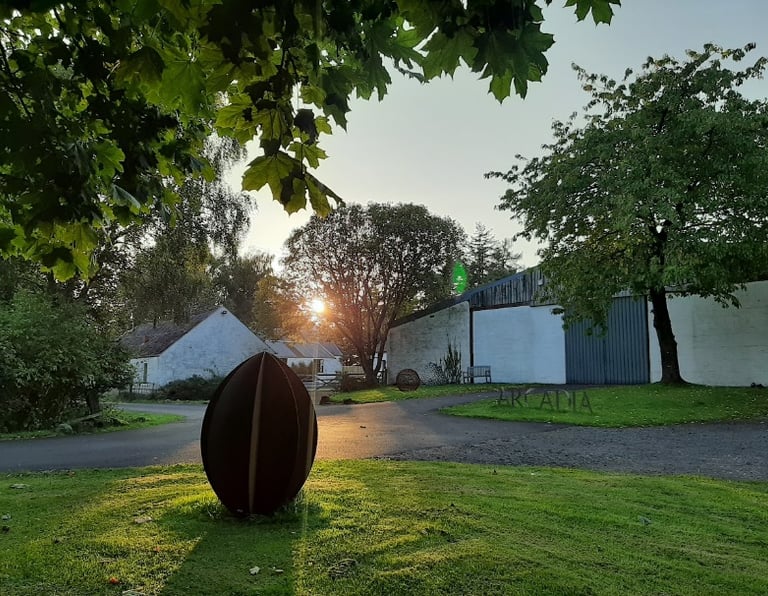
After arriving at Arcadia and having a tour of the woodland, what immediately struck me was the confinement of this pocket of ancient woodland – just a few hectares surrounded by farmland and new plantations. I came with a plan to use my bio-photographic approach to collaborate with the ecology of Arcadia’s woodland, what I hadn’t considered was the importance of this small area of biodiversity when the vast majority no longer exists around it.
That evening I researched using the Ancient Woodland Inventory by NatureScot. The land that Arcadia sits on is designated 2A Ancient Woodland – long established, semi-natural, ancient. Looking at the Inventory map was a very sobering moment, seeing only tiny sporadic pockets of blue dotted about, and much of this is long-established plantation rather than truly ancient.
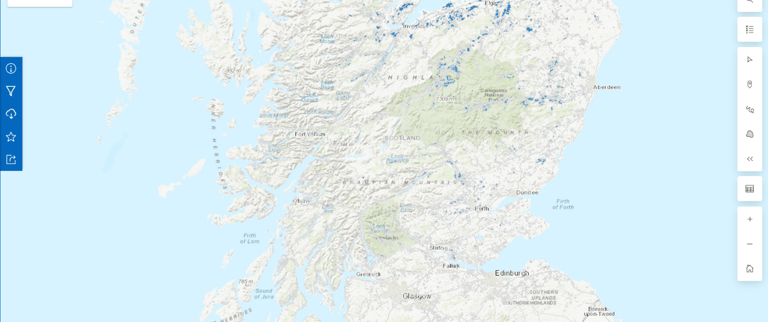
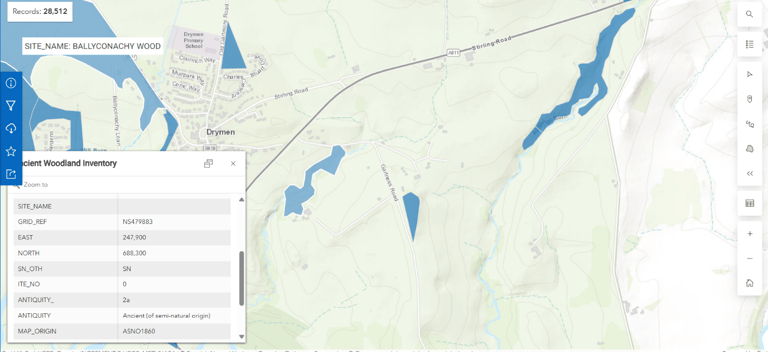
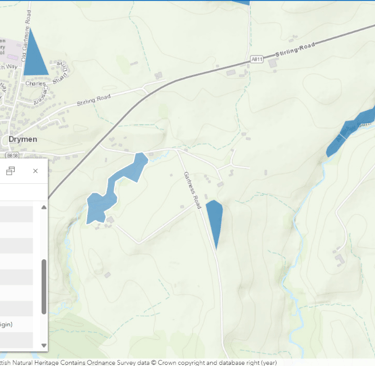
Looking at this map, it is striking to me how small each section of ancient woodland is and how spread out they are. This has framed my exploration of the Arcadia land, focusing on this one small pocket and showing the amount of biodiversity that exists within ancient woodland.
Day 2:
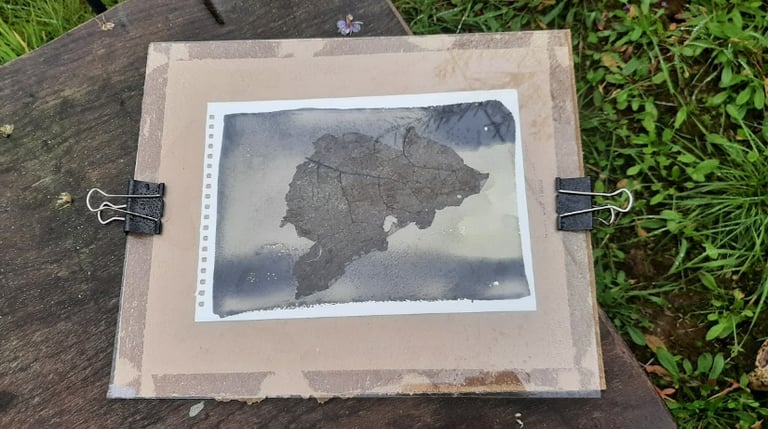
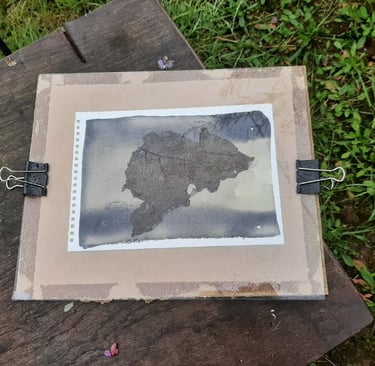
I experimented with using cameraless photography techniques to capture elements of the woodland, like this decaying leaf as a cyanotype print.
I also found loads of mushrooms whilst walking around the centre. I am really glad I am here right at the start of mushroom season as the mushrooms are a great visual representation of the entanglement between lifeforms in ancient forest ecosystems, where the fungi mycelium passes nutrients and information between other organisms.
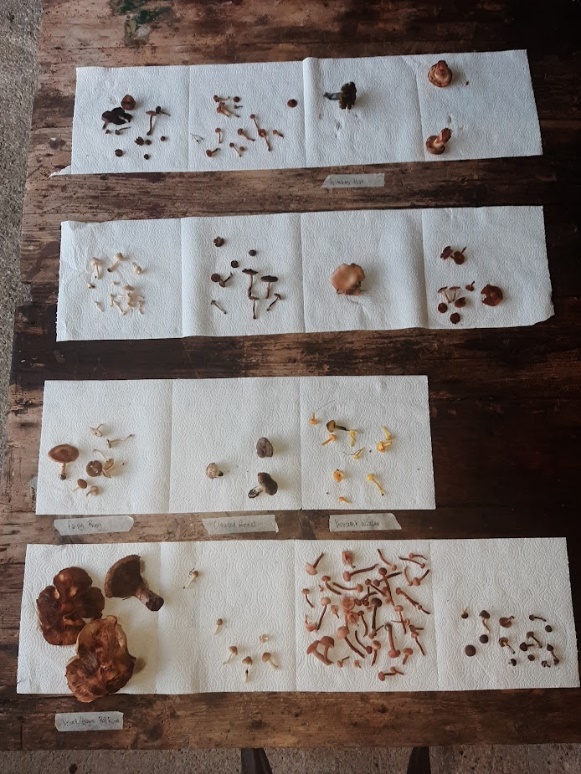
Day 3:
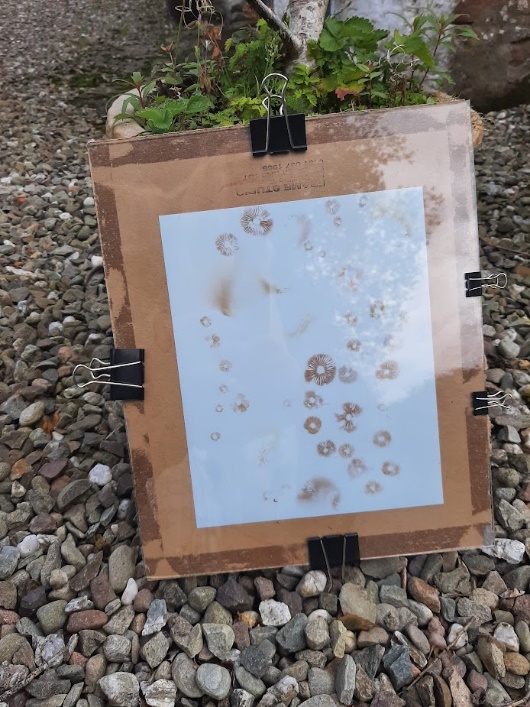
I left the mushrooms in a dark shed overnight to release their spore prints on a plate of glass. In the morning I used this plate with the spore prints to experiment with some more cameraless processes including lumen prints and cyanotypes. This is the first time I have tried out capturing spore prints and I am going to keep experimenting with this over the course of the week.
Day 4:
After more spore prints in the morning, in the afternoon I explore the bank of the woodland on the far side of the burn where there was loads more of diverse mushroom species. I also thought about the characteristic of ancient woodlands, which are like a tangle of organisms – a messy, unorganised hoarding of different species/beings/life.
Day 5:
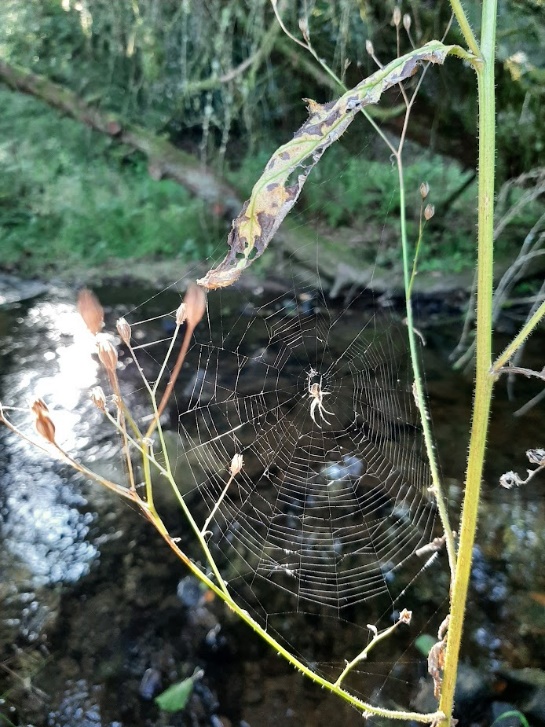
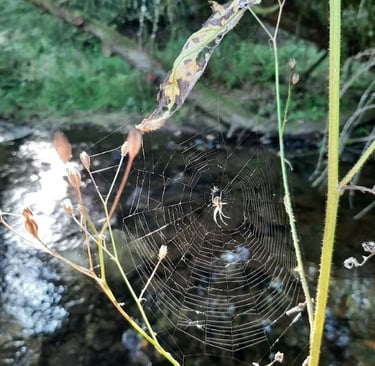
I went back into the woodland, walking along the length of the burn to gain a different perspective.
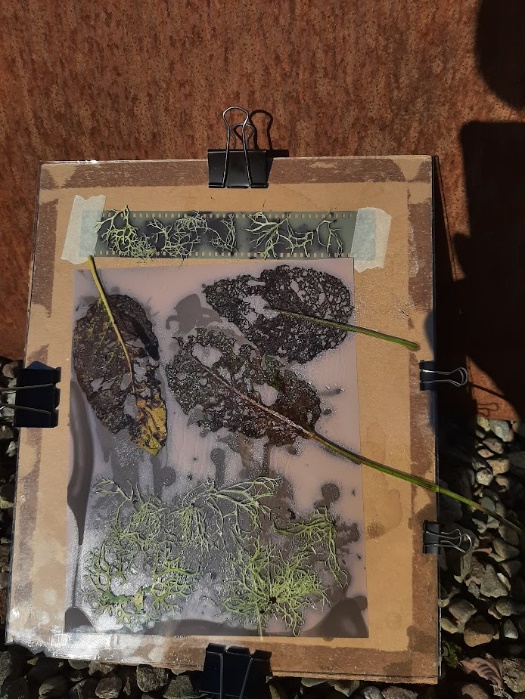
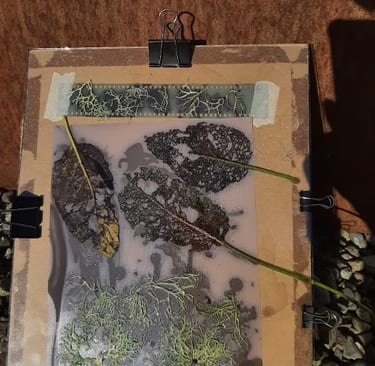
I collected some more organic ephemera to use in cameraless processes including some decaying leaves and lichen which I used for these lumen and phytograms.
Day 6:
I started the day with more spore prints and did a final visit to the woodland to collect ephemera to bring back to ASCUS Art and Science lab with me. I will make use of these materials in the lab by placing them on petri dishes alongside the 35mm images I have been taking to allow for the microbe cultures from the woodland to grow across the negatives, leaving their imprints on the images.
I am really grateful for this time at Arcadia which has allowed me to fully immerse myself in one area in a way I have not had the opportunity to do before. I am looking forward to continuing this project back at ASCUS lab and seeing what more can come of my creative collaborations with the nonhuman life from Arcadia ‘s ancient woodland. To see more of the development of this project you can follow me on Instagram @imogenhero. Thank you to Rob and Susan at Arcadia and Creative Scotland both for supporting this project!